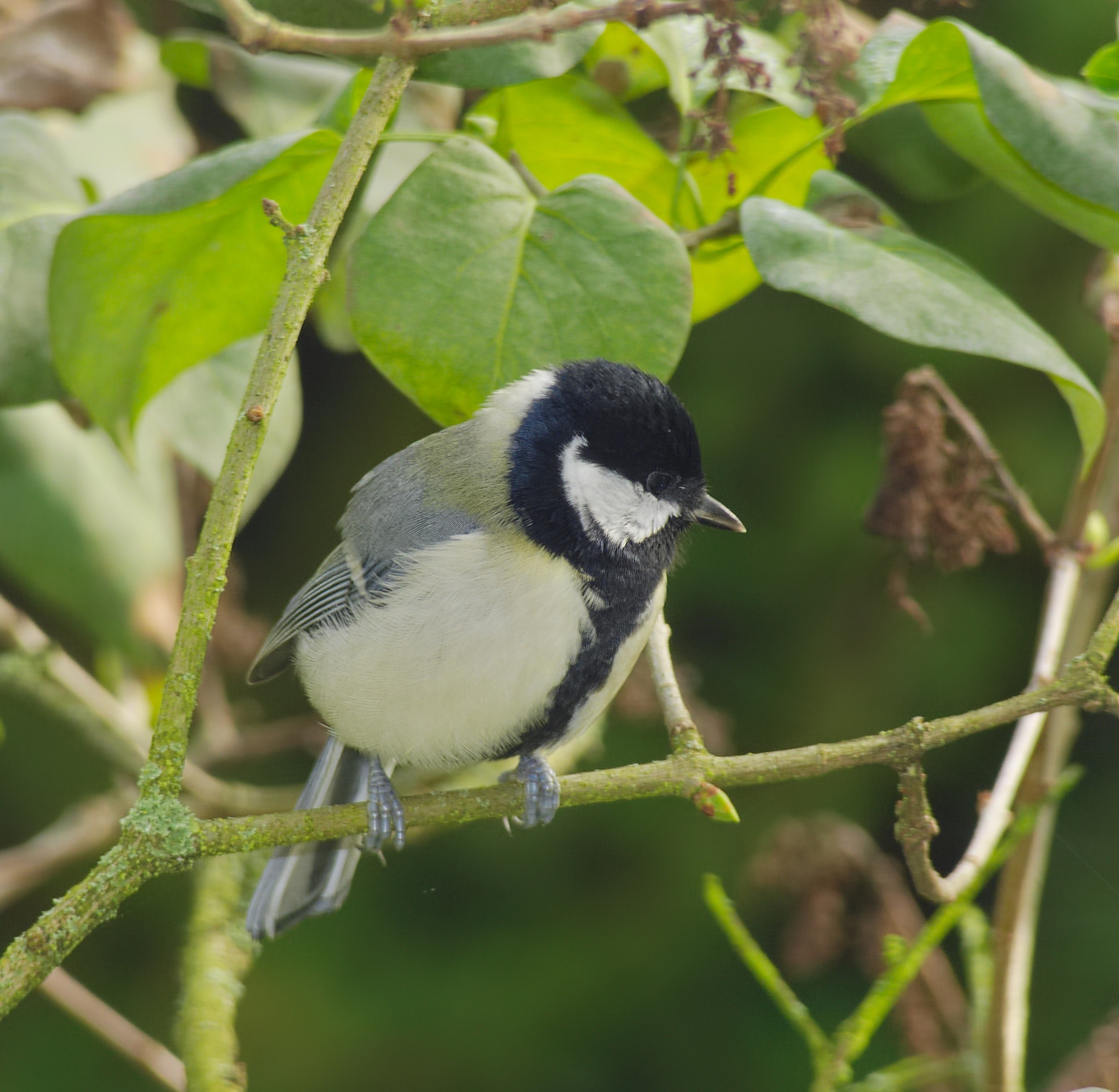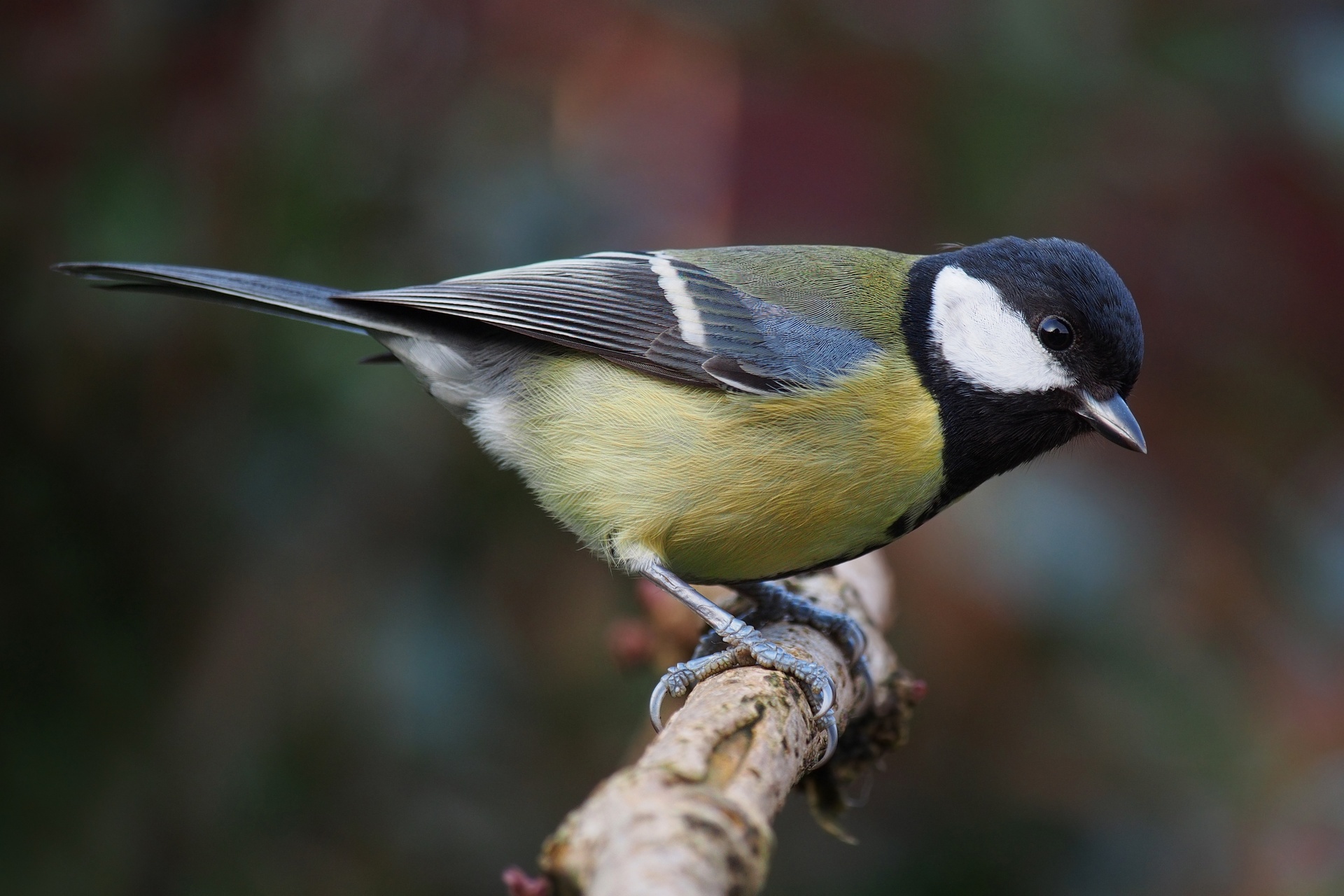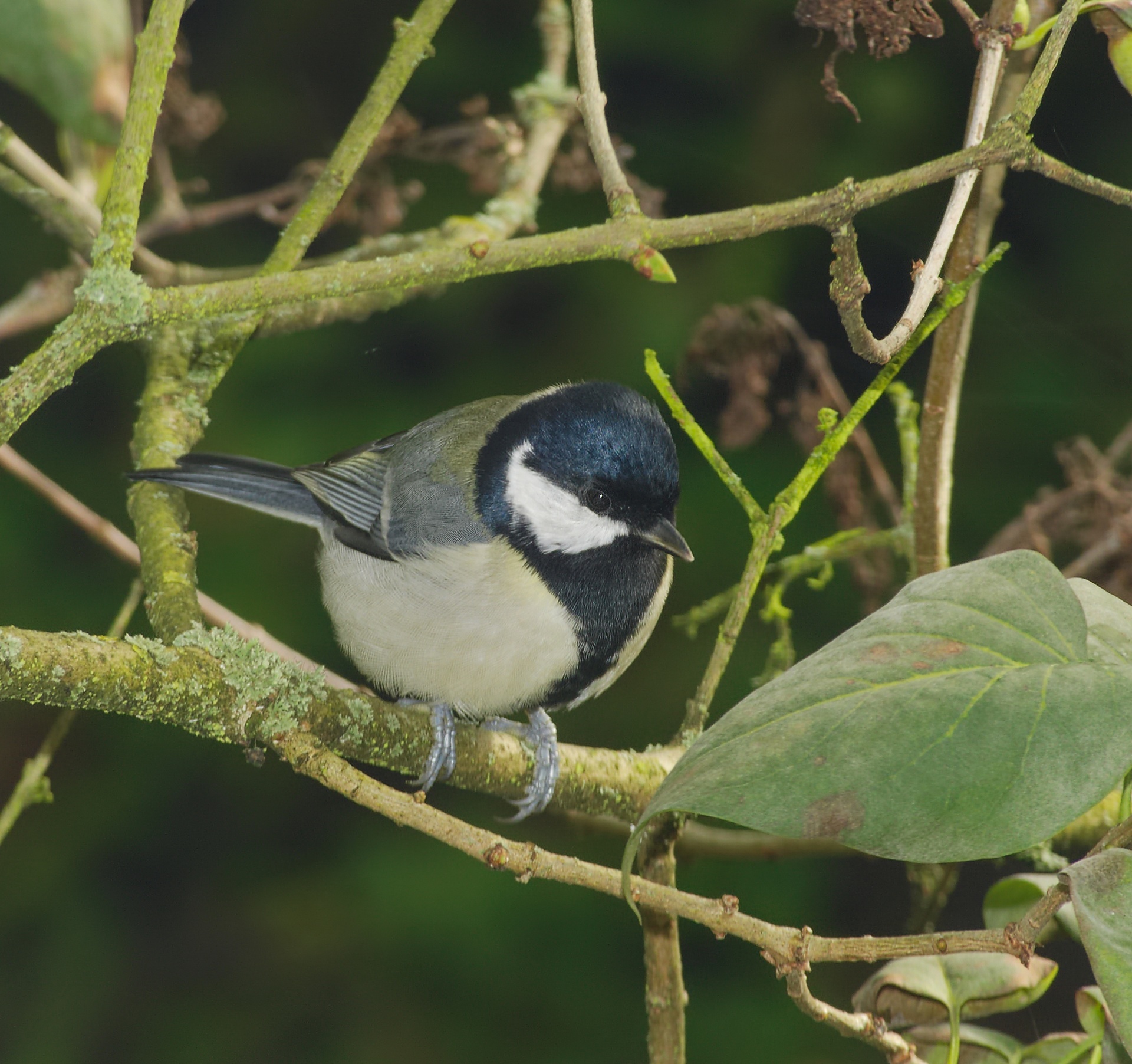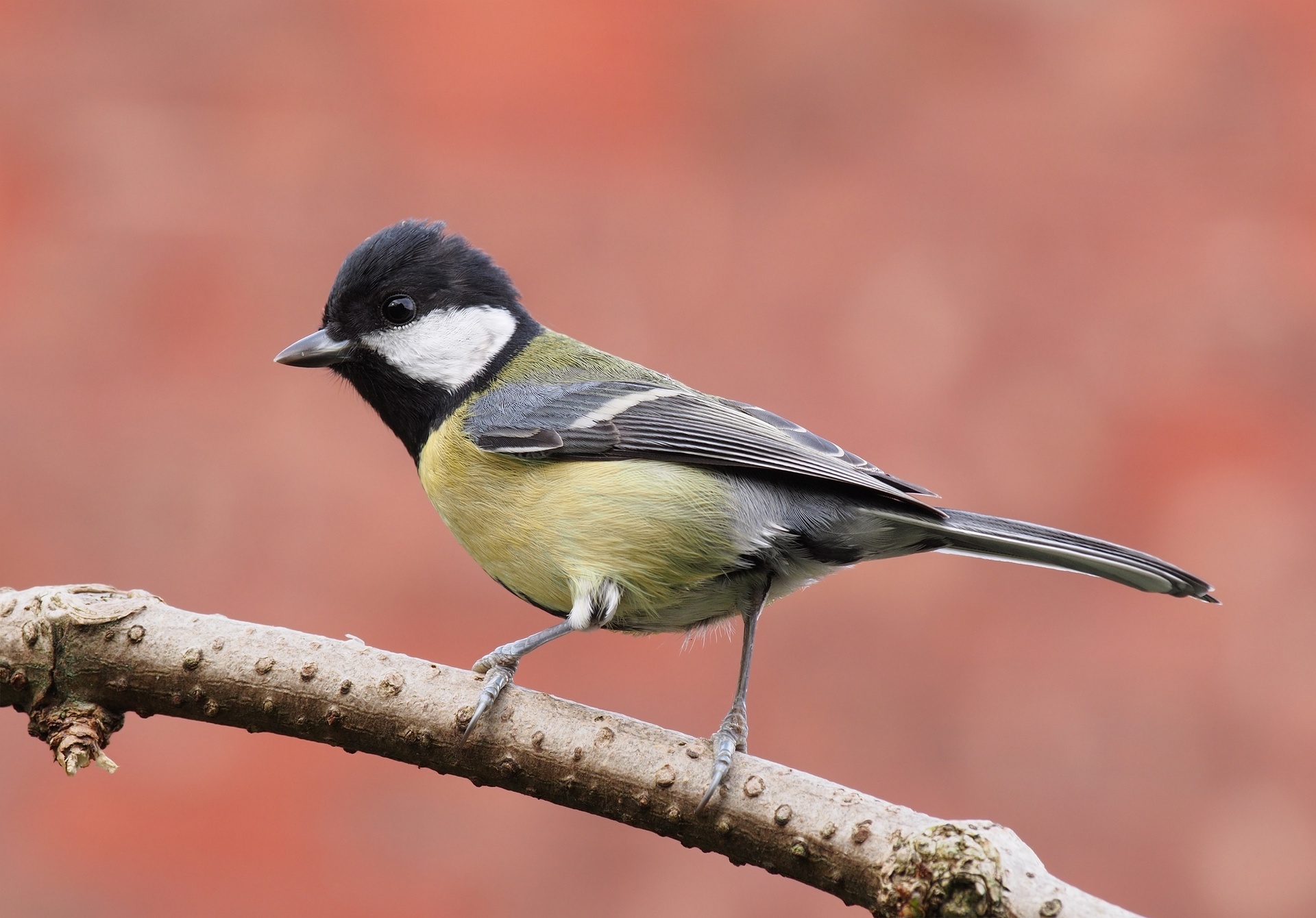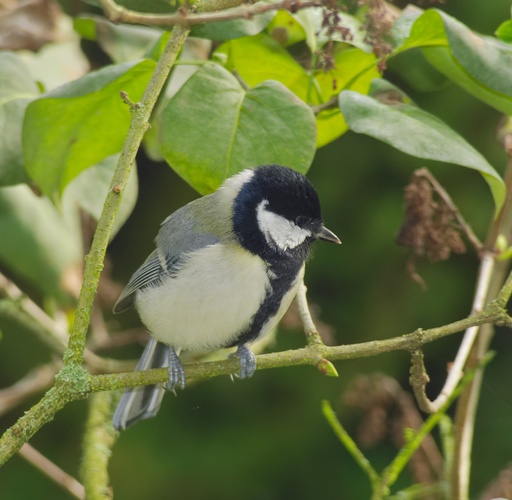
The great tit (Parus major) is a small passerine bird in the tit family Paridae. It is widespread and common throughout Europe, the Middle East, Central Asia and as far east as the Amur River. It also occurs in parts of North Africa where it is generally resident in any sort of woodland. Most great tits do not migrate, except in extremely harsh winters. Until 2005 this species was lumped with numerous other subspecies. However, DNA studies have revealed that these subspecies are distinct from the great tit, and they have now been classified as two distinct species, the cinereous tit (Parus cinereus) of southern Asia, and the Japanese tit (Parus minor) of East Asia. The great tit remains the most widespread species in the genus Parus.
The great tit is a distinctive bird with a black head and neck, prominent white cheeks, olive-coloured upperparts and yellow underparts. There is some variation amongst the numerous subspecies. Predominantly insectivorous in the summer, the species consumes a wider range of food items in the winter months, including small hibernating bats. Like all tits, it is a cavity nester, usually nesting in a tree hole. The female lays around 12 eggs and incubates them alone, although both parents raise the chicks. In most years, the pair will raise two broods. However, the nests may be raided by woodpeckers, squirrels and weasels and may become infested with fleas, and adults may be hunted by sparrowhawks. The great tit has adapted well to human-induced environmental changes and is a common and familiar bird in urban parks and gardens. The great tit is also an important study species in ornithology.
Font: Wikipedia
 Animalia (Regne) -> Chordata (Fílum) -> Aves (Classe) -> Passeriformes (Ordre) -> Paridae (Família)
Observation portals: