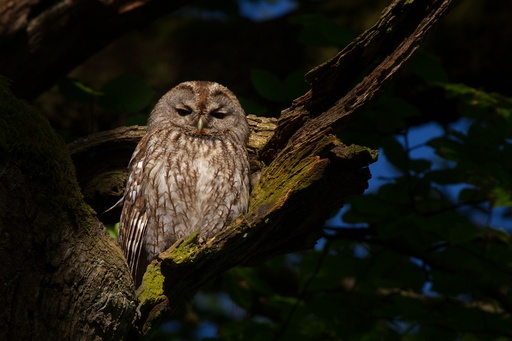
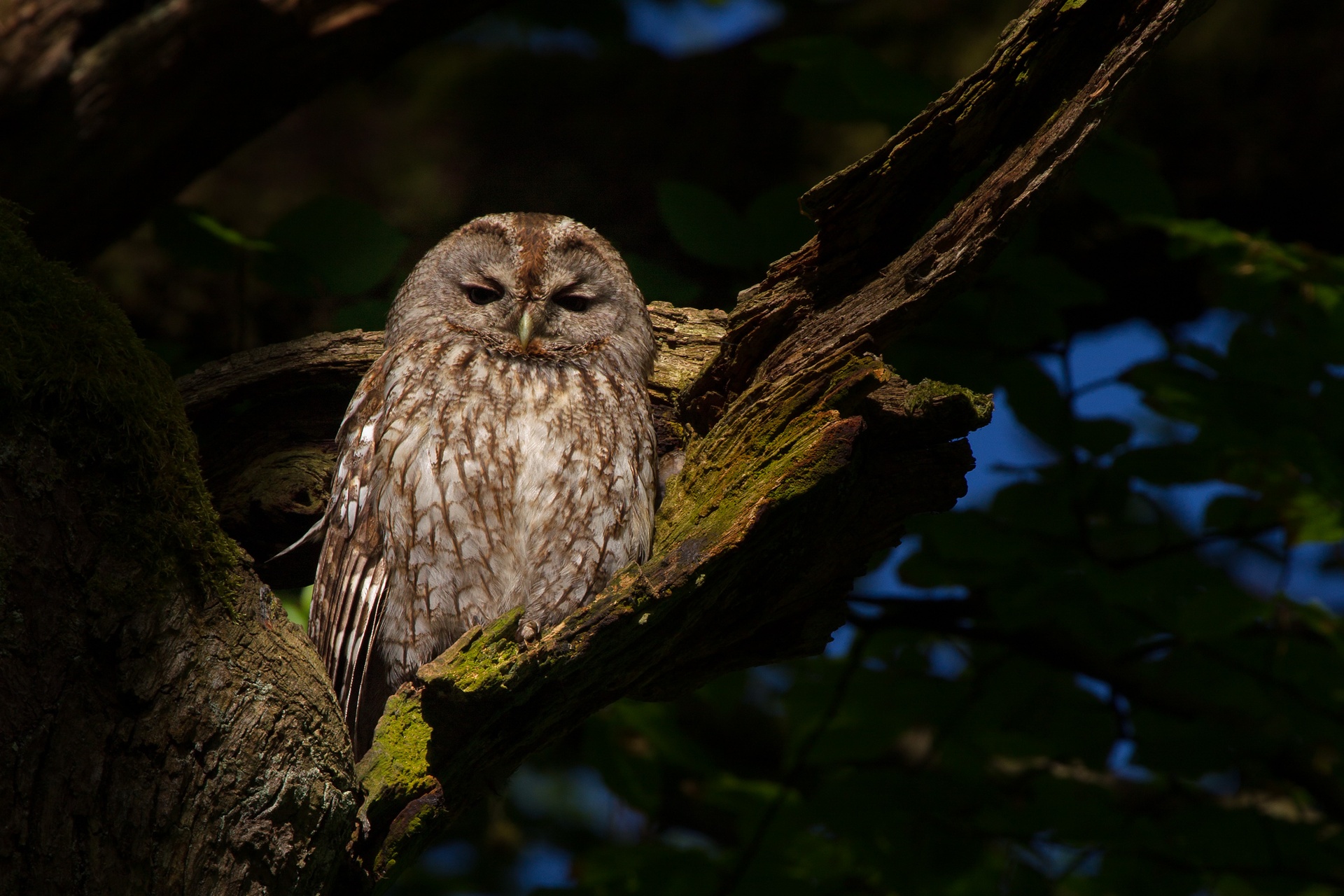
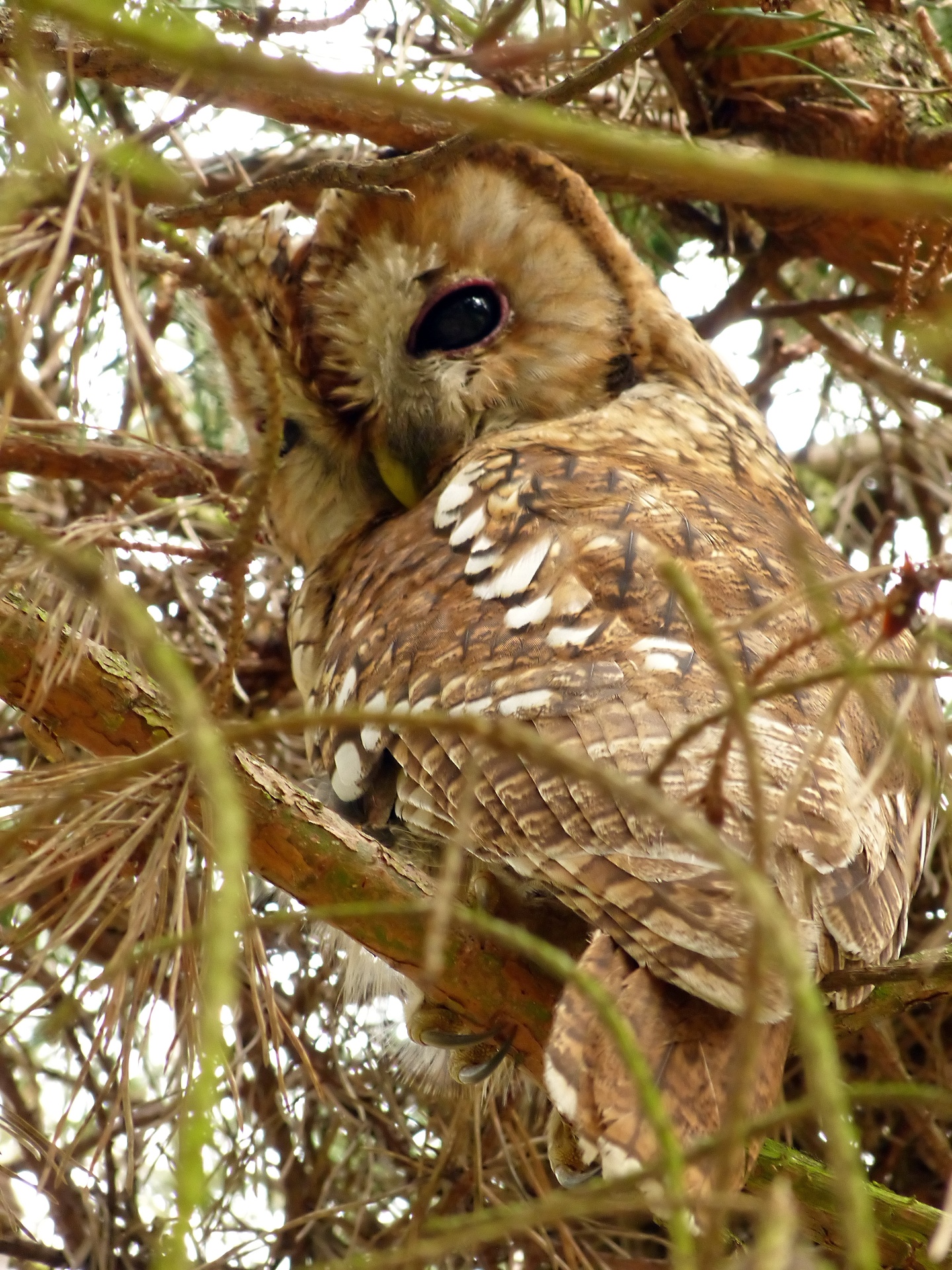
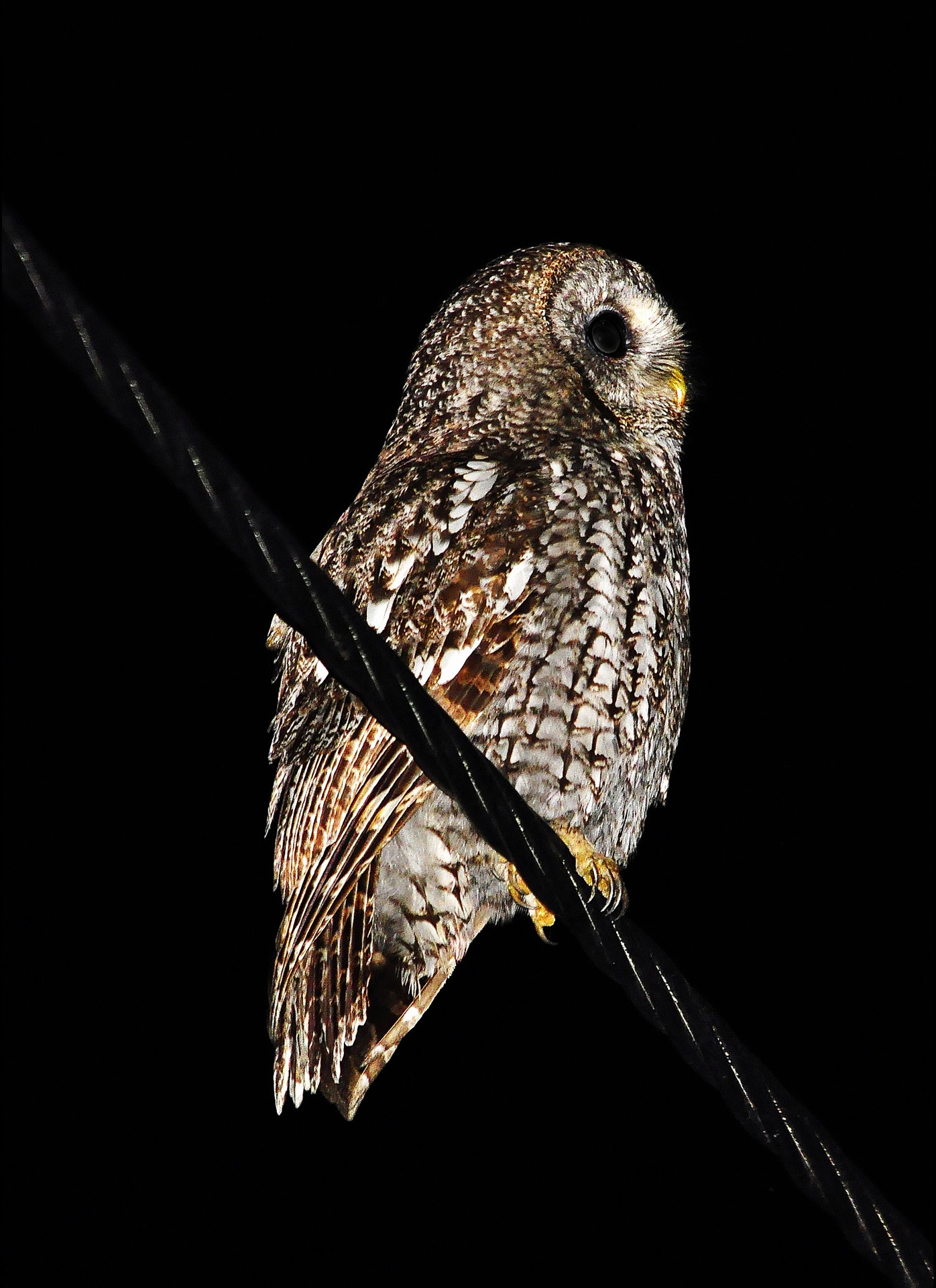
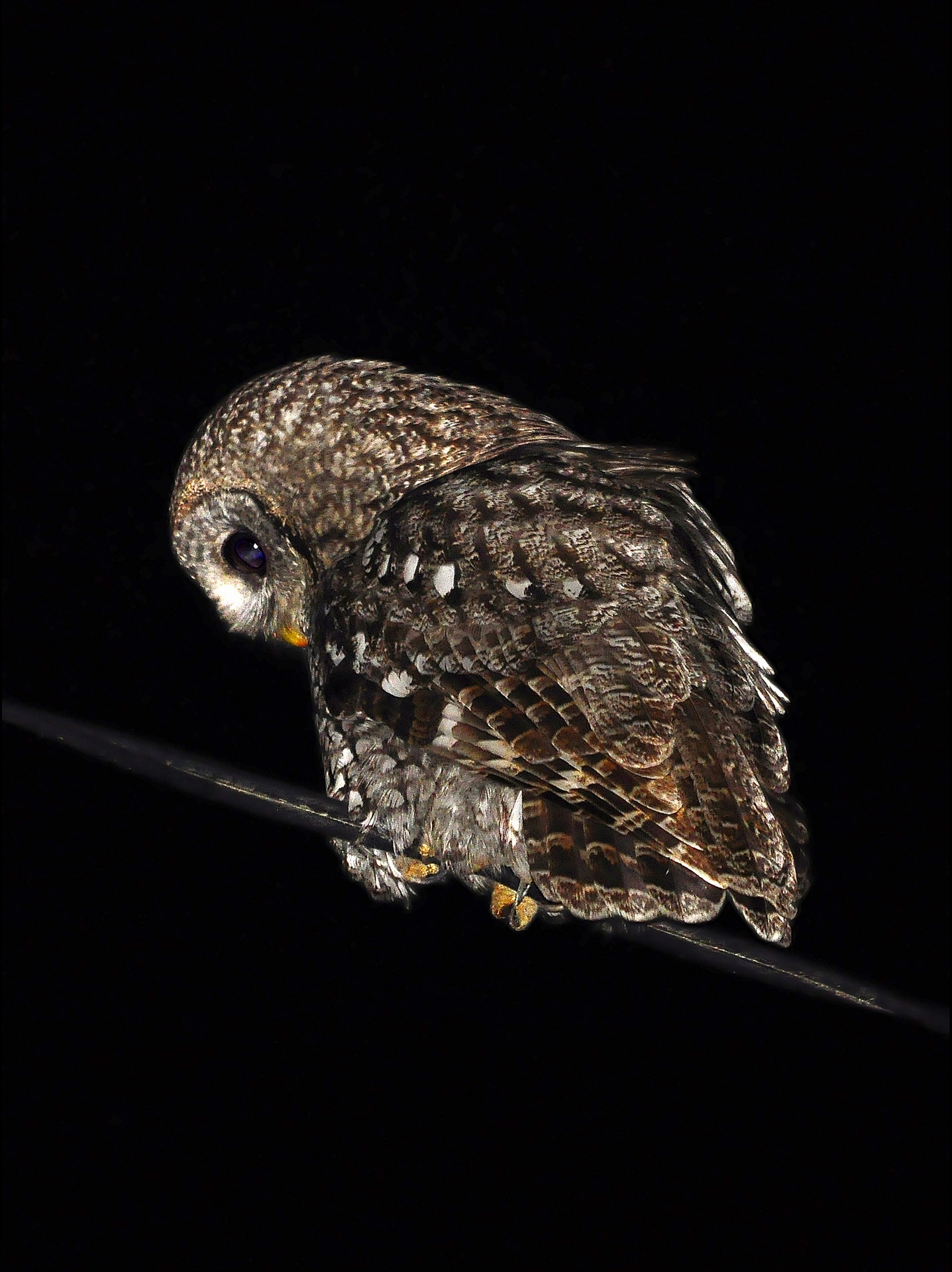
The tawny owl (Strix aluco), also called the brown owl, is a stocky, medium-sized owl in the family Strigidae. It is commonly found in woodlands across Europe, as well as western Siberia, and has seven recognized subspecies. The tawny owl's underparts are pale with dark streaks, whilst its upper body may be either brown or grey (in several subspecies, individuals may be of both colours). The tawny owl typically makes its nest in a tree hole where it can protect its eggs and young against potential predators. It is non-migratory and highly territorial: as a result, when young birds grow up and leave the parental nest, if they cannot find a vacant territory to claim as their own, they will often starve.
The tawny owl is a nocturnal bird of prey. It is able to hunt successfully at night because of its vision, hearing adaptations and ability to fly silently. It usually hunts by dropping suddenly from a perch and seizing its prey, which it swallows whole. Its typical prey are rodents, although in urbanized areas its diet includes a higher proportion of birds. It also sometimes catches smaller owls, and is itself sometimes hunted by the eagle owl and the Eurasian goshawk.
Its retina is no more sensitive than a human's. Its directional hearing skill is more important to its hunting success: its ears are asymmetrically placed, which enables it to more precisely pinpoint the location from which a sound originates.
The tawny owl holds a place in human folklore: because it is active at night and has what many humans experience as a haunting call, people have traditionally associated it with bad omens and death. Not all owl species make a hooting sound. The double hoot, the tawny owl's prototypical call, is a call and response between a male and a female.
Font: Wikipedia
 Animalia (Regne) -> Chordata (Fílum) -> Aves (Classe) -> Strigiformes (Ordre) -> Strigidae (Família)
Observation portals:

.jpg)

